English| EUR
Suggested for you
More currencies
Choose a language
Both Rwanda and Uganda offer close encounters with mountain gorillas in their natural habitat, but the experience differs in permit cost, trek difficulty, travel time from the capital, and group logistics. This guide lays out the concrete differences so you can choose the destination that matches your budget, timeline, and hiking comfort.
Quick answer
Gorilla trekking Rwanda vs Uganda comes down to access speed versus permit cost. Rwanda's Volcanoes National Park sits 2.5 hours from Kigali with a 1,500 USD permit; Uganda's Bwindi Impenetrable Forest requires 8-10 hours overland from Kampala or Entebbe with a 700-800 USD permit. Both countries protect the same mountain gorilla population across the Virunga range, and both limit visits to one hour with the gorillas.
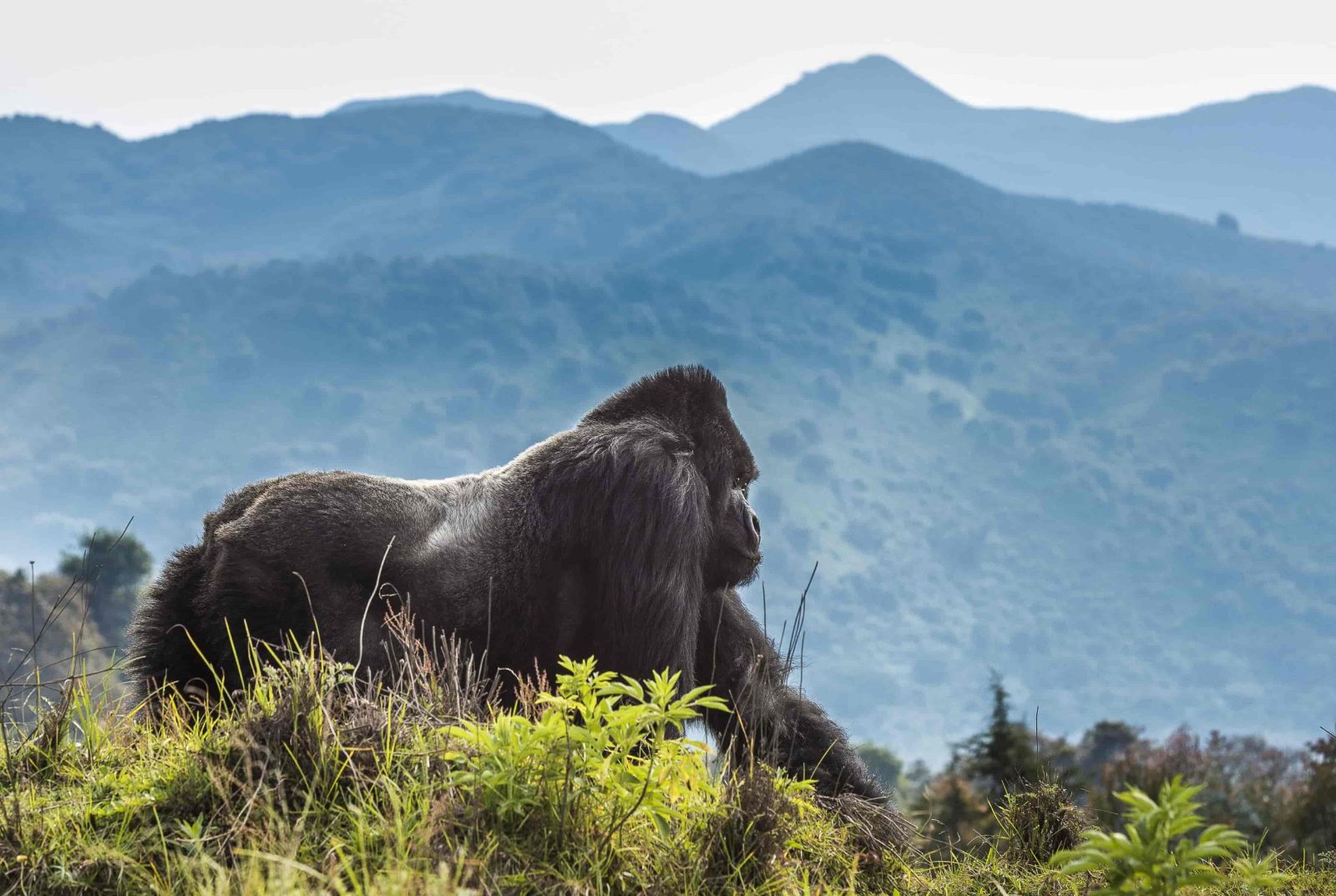
Mountain gorillas inhabit only two regions on Earth: the Virunga Massif straddling Rwanda, Uganda, and the Democratic Republic of Congo, and Uganda's Bwindi Impenetrable Forest. Roughly half the world's 1,063 mountain gorillas live in the Virunga volcanoes, shared between Rwanda's Volcanoes National Park and Uganda's Mgahinga Gorilla National Park, while the other half occupy Bwindi's steep forested ridges. The choice between gorilla trekking in Rwanda and Uganda hinges on three factors: how much you're willing to spend, how much time you have to reach the trailhead, and what terrain you're prepared to hike. Rwanda's appeal is logistical efficiency. Volcanoes National Park lies in the country's northwest corner, a smooth 2.5-hour drive from Kigali on paved roads. You can fly into Kigali in the morning, reach the park by afternoon, and trek the next day. The terrain in Volcanoes varies—some habituated gorilla families range at lower elevations with shorter walks, others require steep climbs through bamboo and hagenia forest—but the park's infrastructure and guide-to-visitor ratio make it the more streamlined option. Uganda counters with lower fees and longer wilderness immersion. Bwindi's permits cost roughly half of Rwanda's, a significant difference if you're booking for a small group or adding multiple treks. The drive from Entebbe or Kampala takes a full day, and Bwindi's topography is more demanding: narrow ridgelines, thick undergrowth, and elevation swings that can push treks past four hours. Mgahinga, Uganda's other gorilla park, borders Volcanoes directly and shares the same volcanic landscape, but it hosts only one habituated family, making permits harder to secure. Both countries enforce identical trekking rules. Groups are capped at eight visitors per gorilla family per day. You'll spend one hour with the gorillas once your guide locates them. Porters are available at both parks to carry daypacks and steady hikers on steep sections. The gorillas themselves show no awareness of national borders—families occasionally cross between Rwanda and Uganda, and research teams collaborate across the range. The encounter itself—watching a silverback recline in a clearing, juveniles somersaulting overhead, mothers cradling infants—is indistinguishable. What separates the two destinations is the journey to that hour and what you're willing to trade to get there.
“The gorillas themselves show no awareness of national borders—families occasionally cross between Rwanda and Uganda, and research teams collaborate across the range.”
The optimal window for gorilla trekking in Volcanoes National Park is during the dry seasons, which offer the most accessible trail conditions. These periods, spanning from mid-December to early February and June to mid-September, minimize rainfall and facilitate movement through the mountain vegetation.
Dry; 15°C–25°C. Lower risk of slippery paths and easier hiking.
These months align with drier conditions, making forest traversal less physically demanding.
Dry; 16°C–26°C. Clear skies and minimal rainfall.
This short dry season provides consistent weather favorable for trekking activities.
Rainy; 14°C–23°C. Frequent precipitation and muddy conditions.
Vegetation is dense and paths are often muddy, though parks are less crowded and lodge rates may be lower.
Verdict: The best time for trekking is during the June to mid-September dry season when trail conditions are most stable.
Volcanoes National Park is located in Kinigi, Musanze District, in the Northern Province of Rwanda. The most efficient way to reach the park headquarters is by private vehicle or pre-arranged transport from Kigali.
Kigali to Musanze via RN4
Kigali to Kinigi Park Office
Kigali to Musanze (Nyabugogo Bus Park)
Plan to reach the park office in Kinigi between 06:45 and 07:00. Mandatory briefing for gorilla trekking activities begins promptly at 07:00.
The Volcanoes National Park office in Kinigi maintains a consistent daily operating schedule for visitors. The park is open seven days a week to facilitate trekking activities.
Both Rwanda and Uganda require advance permits and specific health documentation, along with sturdy gear suited to muddy, steep terrain.
Everything you need to know about gorilla trekking rwanda vs uganda
When considering gorilla trekking Rwanda vs Uganda, the primary distinction lies in accessibility and terrain. Volcanoes National Park in Rwanda is generally considered more accessible from the capital, while Bwindi Impenetrable Forest in Uganda offers a denser jungle environment. Both locations provide the opportunity to spend one hour with a habituated gorilla family after a mandatory briefing. Choosing between gorilla trekking Rwanda vs Uganda often depends on your travel itinerary and preferred landscape. While prices for permits can vary by country, the official entrance fee for gorilla trekking in Rwanda is 1,500 USD per person. This fee covers your permit, guide services, and the park experience. Always check the official site for the most current pricing structures. The habitat for these primates is high-altitude, dense forest, which can be physically demanding regardless of the country chosen. Proper physical preparation is recommended for any mountain gorilla trekking experience, whether you choose gorilla trekking Rwanda vs Uganda. Permits for both nations are strictly limited and highly sought after. It is essential to secure your reservation well in advance of your travel dates to guarantee availability. Trekking durations vary significantly depending on the movement of the gorilla family and your chosen group. While the observation time with the animals is strictly limited to one hour, the approach can take anywhere from a few hours to a full day of hiking. Many travelers planning for gorilla trekking Rwanda vs Uganda often underestimate the physical requirements of the hike. The minimum age for visitors wishing to trek and view mountain gorillas is typically 15 years old. This regulation is strictly enforced in Volcanoes National Park to ensure the safety of both the visitors and the habituated animals. Always verify specific age requirements with the park authorities before confirming your plans. For those trekking in Rwanda, the destination address is in Kinigi, Musanze District. Travelers should aim to arrive at the park headquarters for the mandatory briefing between 06:45 and 07:00.
Best Time for Gorilla Trekking in Rwanda
Read more Tickets & tours1 Day Gorilla Trek Rwanda Price
Read more GuideRwanda Gorilla Trekking Packing List
Read more GuideGorilla Trekking Rwanda Age Limit
Read more GuideGorilla Trekking Rwanda Cost per Person
Read more GuideRwanda Gorilla Trekking Permits
Read more Tickets & toursGorilla Trekking Rwanda Packages
Read more